Posts

Body Worlds: Amsterdam - The Happiness Project

Image
I've recently had a break from writing posts as I was busy working and travelling. However, as I have a bit of time this evening, I wanted to share my experience from the amazing attraction, which I had an opportunity to attend during my visit to Amsterdam, Holland, where I went last month. The Body Worlds is well known to be a rather controversial set of exhibitions containing real dissected bodies of humans (coming from willing donors) and animals, preserved via a method known as plastination. The technique was developed by the founder of the Body Worlds, Gunther Von Hagens, in order to conserve specimens, so that they do not smell or decay. It is done by replacing the fat and water within the bodies with plastics. From experience, I can say that the method works amazingly well as during my time at the exhibition I could not smell anything bad, only a slight smell of plastic. Labelled plastinate of a human heart. While it is common for other people (such as my poor mot...

Dead Birds: Part 2

Image
It has been a few months since I have published my previous photos of dead birds in the earlier post . Over the succeeding months I encountered three interesting specimens, which I decided to share in this post. Bird 1: Spanish Seagull in Tabarca, Alicante, Spain The corpse of a seagull found on a beach of pebbles in Tabarca, Spain I have encountered this dead seagull during my holiday in Spain in late February, as I was walking along the beach with my friends. This beach was part of the Tabarca island, located very close to Alicante. The views there were amazing and it was one of the best holidays I ever had. That's why a month later I came back to Alicante, and with all that travelling and chaos at my workplace I haven't had time to write many new posts.  But going back to the theme of this post, surely, dead seagulls must be a very common sight in places close to the sea and other water reservoirs. But while most people will look at cadavers like this with...

Impalement

Image
Impalement can refer to either piercing through an individual with a sufficiently sharp stake or pole or hanging them off it, either by nailing or tying them to it. In this post I will be referring to the type of impalement, used as capital punishment, which involves execution by means of piercing through the central body mass of the guilty individual. Impalement can be carried out either vertically (through you know where, which would vary depending on the individual's gender) or traversally (through the chest or torso) in order to cause a slow and painful death. This would be typically carried out as a consequence of crimes against the state in various parts of the world. The time taken from being initially "skewered" to death would typically take from a few minutes to 3 days, depending on the exact method. The most notorious individual throughout history known to have carried out the punishment was Vlad the Impaler, aka Dracula, the Wallachian prince who lived in t...

Promession

Image
As described in one of my previous posts , environmentally-friendly funerals are increasingly gaining popularity. Interestingly, not all modern funerals in the western world involve disposing of the body by conventional means, such as cremation or full body burial. A method which has recently gained increased public awareness is promession, i.e. freeze-drying the human remains prior to disposal. The method allows the body to become a nutrient-rich fertiliser, allowing the life cycle to progress naturally. The process essentially involves freezing the dead body, before shaking it to make it fall apart The method is relatively straight-forward, involving 5 key stages: (a video demonstrating the process can be watched here:  https://youtu.be/HpnopgptKHk ) 1. Coffin separation : the body is removed from the coffin and placed in a chamber of the Promator machine. 2. Cryogenic freezing : liquid nitrogen at -196 degrees Celsius is used to freeze the body, in effect turning it ...

Mass Bird Deaths - An Unexplained Phenomenon

Image
An unusual phenomenon has been observed in various parts of the world, which has recently been ocurring more regularly. Flocks of flying birds suddenly appear to loose control and fall to the ground. While this has occurred with a variety of bird species, it appears to be most common with crows and blackbirds. Mysterious phenomena are being documented all over the world of entire flocks of birds literally falling from the sky. While most of the birds die after taking the fall, some survive but are usually not strong enough to pick themselves up and fly away. Some witnesses of these events reported that the surviving birds appeared to be paralysed, being too weak to stand, even when pedestrians attempted to help them. The most recent event to date was observed at the end of January this year in Italy, Europe, and Draper, US. The bodies of many of the fallen birds had been flattened. Mostly blackbirds and crows are being affected. In many cases the exact causes of death remai...

Euthanasia

Image
Euthanasia is a very controversial issue. It is often described as compassionate killing, or an act of causing death for the benefit of a suffering person. The original Greek word, euthanos, means easy death. While human euthanasia is legal in some countries including Canada, Netherlands, Belgium and Colombia, in most other places it is considered illegal, although assisted suicide is more widely accepted. In the UK neither is legal. Although similar, there is a difference between the act of assisted suicide and euthanasia. Euthanasia involves action or deliberate lack of it, with the intention of causing death. For example, it might involve a lethal injection or withholding food from a terminally ill person who is unable to feed themselves. Meanwhile, assisted suicide involves providing an indirect means of death for the sufferer, as per their request, such as giving out too much prescription medication, which would allow for an overdose. While by definition the law of euthanasia ...

Boiling Alive

Image
Boiling someone alive was a rather brutal punishment used by several rulers throughout history. It is believed to be one of the slowest and most painful ways to die. The method is documented to have been commonly used throughout the world in the 16th century. An example of a British monarch who was known to use this punishment was Henry VIII. He typically used it on individuals accused of poisoning, as he believed it to be an unforgiveable offence. Those found guilty would be suspended via a network of pulleys and ropes above a drum filled with boiling liquid, such as water, tar, acid, wine, oil, molten lead etc. As a method of psychological torture the executioner would often slowly lower the guilty towards the pot, before bringing them back up without actually plunging them into the liquid. Image from Wikipedia of a London Dungeon exhibit demonstrating the punishment of boiling alive While being lowered towards the pot, the skin of the prisoner would begin to blister, pop...

Gaza Zoo and Its Sad End

Image
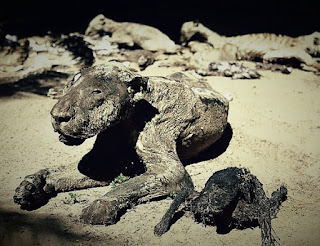
In  one of my previous posts I wrote about the Qualqilya zoo, where taxidermy is used to preserve dead animals, many of which had been killed by war, so that they can still be exhibited. Similarly, the city of Gaza and its zoo had been significantly affected by the militant conflict between Israel and Palestine, but the Gaza zoo had suffered to a much greater extent. Mummified animals were displayed as exhibits in the zoo. The zoo in Gaza opened in 2007 and many of its animals were smuggled accross the Egyptian border to create the initially thriving attraction. However, in 2008 a military offensive was launched by Israel against Hamas, which lasted 3 weeks, and during that time the zoo owner was unable to access the establishment. As a result, many animals starved to death. To preserve them, Mr Awaida (the owner) decided to resort to self-taught taxidermy using formaldehyde and sawdust. The conditions in the area had not improved since. Due to shortages in funding many ...

Why I enjoy funerals more than weddings

Image
After coming back home feeling depressed after a friend's wedding, this time I decided to write a more personal post explaining my viewpoint regarding the common events of weddings and funerals, which almost everyone attends at some point during their lifetime. In almost all cultures throughout the world weddings are associated with happiness, while funerals are portrayed as sad events, associated with grief. In my culture a typical wedding would involve the ceremony of a wedding talk where the couple are given their blessing, and signing documents, followed by a party where the guests would dance to music, eat a lot of food and drink alcohol. Meanwhile, at a funeral, the body would be lying in a casket at a hall where a goodbye speech would be given, before being sent off to be buried or cremated. The guests would then go off to a wake, or reception, where food would be provided and people would talk to each other, commemorating the life of the deceased (often crying at the same t...

Predicting Imminent Death

Image
It is fairly common to hear of cases of people who were able to predict that their death was coming shortly before they passed away. It included a personal experience with my grandfather who seemed to have known it a month in advance. While it is a phenomenon which is difficult to explain, with many people being sceptical claiming that such predictions tend to be a coincidence, some animals were found to be able to predict deaths with noteworthy accuracy. A relatively recent story is that of a cat called Oscar, who lives at a nursing home in Rhode Island and enjoys walking around the patients' rooms without interacting much with them. However, it was noticed that the cat is very friendly towards patients who are about to die and his prolonged presence by their bedside would often be an indicator of the patient being about to pass away within several hours. To date, Oscar had accurately predicted approximately 100 deaths. In 2007, there was a rumour that the cat had been killed...

What happens to a body donated to science?

Image
It is common for individuals and relatives of the deceased to donate dead bodies to science, believing they are contributing to good causes, such as disease research and potential organ donations. Most often there are no questions asked once the donations have been made. However, what should be known, and most often is not publicised, is the fact that donating a body to science is likely to contribute to commercial activities of the company the corpse had been donated to, more than to the interests of actual true science. The reality is that the body-donation industry has loose regulations, and profits often matter more than ensuring the cadavers are actually used for legitimate research. A case has been recently reported of an amateur who purchased human heads from body-donation companies, for several thousand dollars each. He stored the heads in a refrigerator for the purpose of conducting self-taught experiments on them, even though the organisations claimed to only be selling par...

Qualqilya Zoo and Dr Khader's Taxidermy

Image
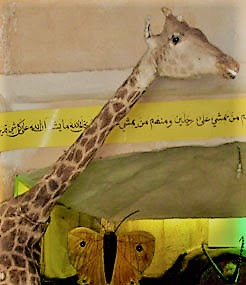
Qalqilya is a Palestinian city, which houses a 2-hectare zoo, open since 1986. It used to be a popular attraction among Arabic and Israeli visitors. However, once the Second Intifada (Palestinian uprising against Israel) began, visitors from outside of Qalqilya were no longer permitted to visit the zoo.  The zoo was often surrounded by violence as protests broke out. For example, at one time school children decided to throw stones at passing Israeli tanks. In response, the soldiers started shooting at them. This resulted in very some tragic losses.  One of the zoo's key projects were its giraffes. At the time the zoo housed two giraffes, male and female, with the female being pregnant at the time. When the sound of gunfire could be heard in the giraffes' enclosure, the male giraffe became very frightened, he panicked, and ran into a wall of his enclosure. This caused him to fall down, and as he was unable to get up, he died due to failed blood circulation (giraffes must not ...

Taxidermy at the Manchester Museum

Image
"The world is not to be put in order; the world is order, incarnate. It is for us to harmonize with this order" - Henry Miller ---------------------------------------- Last weekend I visited my family in Manchester, UK. While I was there I took the opportunity to visit the Manchester museum, where natural history is a big theme and there is a large collection of taxidermy exhibits. My personal favourites were the birds and forest wildlife. Below are some pictures I took of the exhibits: 1. Taxidermy squirrel This exhibit shows part of the process involved in creating a mammal taxidermy. It is clear that the skin removed from the cadaver is placed on a man-made structure shaped as a squirrel. Of course, due to natural decay the animal's real eyeballs are replaced with glass eyes. I had a chance to touch a finished taxidermy squirrel in the museum and it felt like a living, furry animal, except for the lack of a spine. 2. The big bad wolf This angry-looking ...

Tsantsas - Shrunken Decapitated Heads

Image
Severed human heads can be shrunken and preserved. The process used to be carried out by tribal people from the Amazon rainforest for ritual, trade and trophy purposes. In some cases the shrunken heads could be used as toys for children. The demand for tsantsas (another name for the shrunken heads) from traders caused an increase in warfare between some of the Amazon tribes. Most of the demand came from dealers, museums and private collectors. The practice has ended around the 1960s. Tsatsa made by the Shuar tribe, currently exhibited in the Pitt Rivers museum in Oxford The procedure of shrinking a human head would first involve removing the skull by making an incision at the back of the head and pulling the skin off, while severing the muscles and tissues connecting the skin to the skull. The skull is thrown away, eyes are removed and cartlidges from the nose and ears are cut off. The skin is cleaned while being turned inside out. A purpose-made boiling pot is then filled with w...

Promiscuity and Infidelity

Image
I would like to dedicate this post to the man who made me realise that love no longer exists. A brief message to him is as follows: If you ever happen to come across this post, you know I'm talking about you, but the purpose is not to blame you or judge you for seducing countless women with your lies. I wish you could realise that the more you do it, the more likely you are to destroy your own life. The point is that all actions have their consequences. ----------------------------- As the title says, in this post I would like to talk about the potential deadliness of promiscuity (i.e. unsafe or excessive sexual behaviour, in case someone isn't sure). There exists undeniable proof that having multiple partners dramatically increases the risk of contracting sexually transmitted diseases and cancer. And it is not only intercourse which can cause STDs, but also oral sex and even just touching each other can transmit harmful bacteria and viruses. But that's not the who...

Asphyxiation

Image
Asphyxia is the key cause of death from things such as strangulation, drowning and carbon monoxide poisoning. It involves low level of oxygen in the body, combined with high carbon dioxide and acidosis (i.e. build up of lactic acid). In forensics there are 3 key categories of death via asphyxiation: Strangulation, Chemical Asphyxia, and Suffocation. Strangulation is the method most commonly used during murders. It was also used as a method of execution in the past. For example, the garrote was a device used for capital punishment in Spain, until as late as 1940. It involved tying a rope around the neck of the condemned, and twisting it until it was tight enough to cause strangulation. However, self-strangulation, often auto-erotic, is also very common. The auto-erotic type often involves taking in alcohol or other substances, such as drugs, while being strapped and positioned with the head lowered relative to the rest of the body. Several famous people died that way, including the Am...

Dead Birds: Part 1

Image
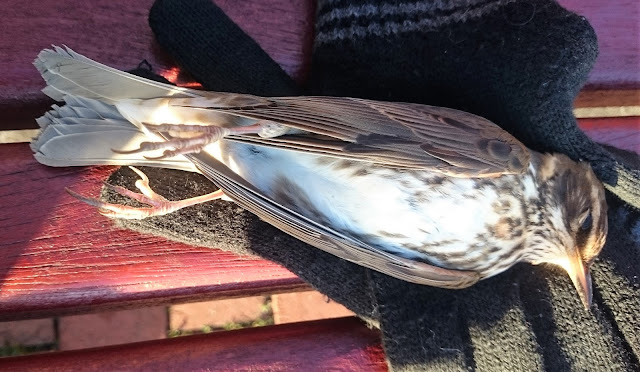
I was always fascinated by dead animals, especially birds and fish, as they usually cannot be handled easily and examined while alive. I have seen many dead birds throughout my life and took a few pictures to document the more interesting cases. Below are a few images of what I managed to find, near to where I live. Bird 1: Likely a lark This specimen was found still alive by my family near Manchester, UK. It was weak and unable to fly so they decided to take it to the vet, but it died on the way there. I believe it was a lark, most likely a skylark, or a meadow pipit, although skylark is more likely due to its size and shape. These birds can be found everywhere in UK, but mostly live in the countryside and farmland. They are not very easy to spot where this one was found, so it was interesting to see.  As seen on the picture, the bird has angular wings, which are long in proportion to the rest of its body, enabling them to fly and hover smoothly. If it was alive, it coul...